Monday, March 30, 2020

Traditional clothing of Asia

Traditional Clothing of Asia

Read the fact files about the traditional clothing of Asia and decide which one would you buy if you got a chance.

Kimono
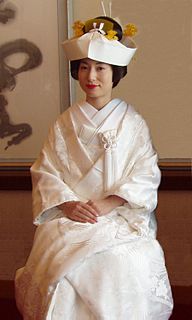
     The word kimono is Japanese for clothing or 'thing to wear', but these days it refers to a traditional style of clothing. Kimonos are T-shaped with wide sleeves. 

       Most people in Japan don't wear them as everyday clothing, but they continue to wear kimonos at formal celebrations, such as weddings and Japanese tea ceremonies.

           The style and colour of the kimono also depends on the person's age or whether he or she is married or single. Although it is more common to see women's kimonos, there are men's kimonos, too. These are usually plainer and less colorful than women's.

Qipao

     The qipao (also known as cheongsam) is a traditional women's dress from China. It's origins go back to the 17th century, but it has changed significantly since that time.

         In those days, it was a loose item of clothing, usually made of silk, which covered the whole body. It was mainly worn by older women, but these days, it is fashionable for women of all ages.
Chinese traditional dress pteris flower married red ...


       Modern varieties of qipao started in Shanghai in 1920s. Unlike the styles, these were a tight fit. Gradually, different types of qipaos  developed, often in bright colours & stylish patterns. Today, qipaos are designed to be examples of both traditional and modern fashion styles in China.

Links
 There are many sites from where you can achieve more information about qipaos. To gather more information visit https://www.thoughtco.com/chinese-dress-qipao-687453
For detailed article visit wikipedia ; https://en.wikipedia.org/wiki/CheongsamThere are many sites from where you can achieve more information about kimonos. To

Friday, March 20, 2020

The Heritage Museum part 2

The Heritage Museum
Part 2

Is fashion all about dresses. The answer probably is no. Fashion's also about hair style, shoes and hats. So lets explore some fashions with mischievous origins.

Bollenhut 

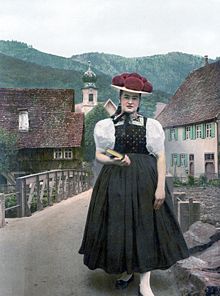
                   Imagine wearing a hat that weighs up to two kilograms! The bollenhut is part of the traditional costume for women in some villages in the Black Forest in Germany.It originated in the mid 18th century.
A women in the Bollenhut, around 1900 ðŸ˜Ž
               It is a straw-hat decorated with 14 pompoms on the top. Red pompoms are for unmarried women, and black ones are for married women.
           This pretty hat is still worn at traditional events and festivals. Next time you see a chocolate and cherry-flavoured Black Forrest cake, it might remind you of the bollenhut!

Klompen

                  Many tourists leave the Netherlands with a pair of klompen as a souvenir. These wooden shoes are a part of  the traditional costumes of the country. It isn't clear when they were first worn, but the oldest shoe found dates back to the 13th century.
A pair of Klompen!
                         Klompen were worn mainly in the countryside. Today, they are still worn as practical safety shoes by farmers and other workers. A lighter type is also worn for traditional dancing.
A broad image of the Klomp!
                              They were traditionally hand-carved and unpainted, but souvenir klompen are now often mass-produced and brightly decorated. Have you got a pair at home?

Wednesday, March 18, 2020

The Heritage Museum part 1

The Heritage Museum 

(Part 1)

Read on to find out more about some uniquely European items of clothing used in some European countries traditionally.

Kilt

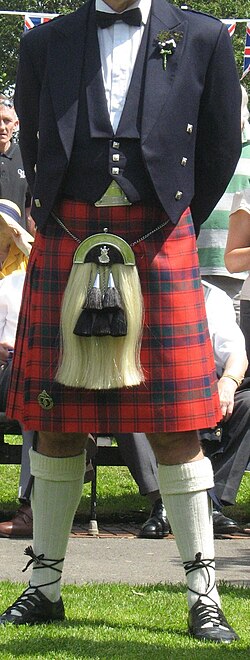
Do men or boys wear skirts?😮 In Scotland, they sometimes do!😂 The kilt is a knee-length skirt that originated in the Scottish Highlands in early 18th century.

The kilt is made up of thick, woolen cloth with a checked pattern, and comes in a variety of colours.

Today, Scots wear the kilt on special occasions like weddings, funerals and sports events. It has also been adapted for casual wear and as sportswear for both men and women.
Flamenco dress

A traditional brightly- long dress with lots of ruffles, the flamenco dress originated in Southern Spain in the late 19th century.

The flamenco dress is usually fitted on top, and flared at the bottom. It has strong colours, and it can be plain or patterned. Women usually wear the dress with a shawl over the shoulders.😎 😎
Today, the flamenco dress is worn by dancers, as well as during festivals and special occasions. It is also frequently seen in fashion shows, as fashion designers continue to be inspired by the beautiful dress. ðŸ‘€